We've all been there: a critical report is due, a batch of invoices needs processing, or customer data is flowing in, and then the lights flicker. For too long, South African businesses have had to build their operations around the unpredictable. While the national grid has stabilised significantly in 2026, the underlying reality for data pipelines remains: resilient data pipelines aren't a luxury; they're foundational for doing business here.
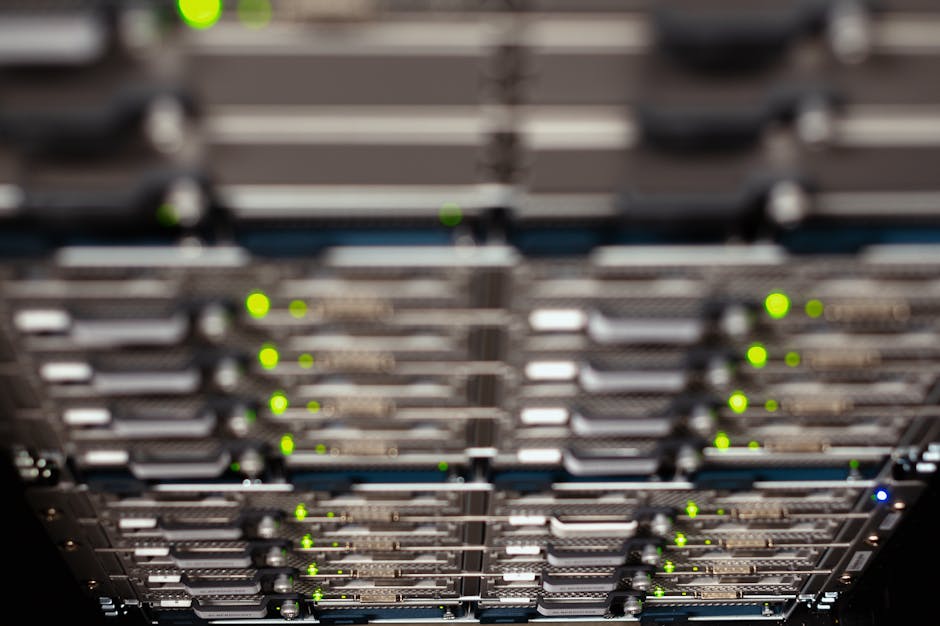
Photo by Brett Sayles on Pexels.
The situation
We often see businesses that have invested heavily in data infrastructure, only to find it vulnerable to local power dips, connectivity issues, or even just the ever-increasing cost of self-managed backup power. Their data pipelines are designed for efficiency in an ideal world, not for the realities of a South African winter or unexpected localised outages. The result? Manual workarounds, delayed reports, frustrated teams, and missed opportunities.
The usual fixes often involve throwing more hardware at the problem – bigger UPS units, larger generators. These are necessary, but they're only part of a layered strategy. Without a pipeline designed to degrade gracefully and recover automatically, even the best hardware is just delaying the inevitable. We've seen teams spend days trying to piece together fragmented data after an unexpected shutdown, losing valuable time and introducing errors. The problem isn't just the power; it's the system's inability to handle the power situation.
How we'd approach it
Our approach starts with acknowledging the environment. We don't build data pipelines as if they're running in a vacuum. We build them for South Africa.
- Cloud-first, not cloud-only: We prioritise cloud platforms like Google Cloud and Azure. A 2023 survey highlighted that 61% of South African businesses moved to the cloud for business continuity, and 60% for disaster recovery. This isn't just about storage; it's about distributed processing and failover. Your data can keep flowing even if your local office goes dark.
- Layered resilience: True resilience is a stack. We design pipelines that can ride through short power interruptions with UPS-backed graceful shutdowns. For longer outages, we ensure the pipeline can shift processing to cloud resources or pick up exactly where it left off once local power is restored. This means robust error handling and idempotent operations are built in from the start.
- POPIA-compliant by design: When data is moving between on-premise and cloud, or recovering from an outage, POPIA compliance is non-negotiable. We build in clear data governance, encryption, and access controls from day one. This isn't an afterthought; it's a core design constraint that leads to more trustworthy systems.
- Edge computing where it makes sense: For critical, real-time operations where latency is a concern, edge computing can process data closer to the source, reducing reliance on potentially unreliable long-haul connectivity. This is particularly relevant for operations that can't afford even a moment's delay.
- Proof, not promises: We believe a proof-of-concept isn't a slide deck. It's a working pipeline, even a simple one, that demonstrates resilience under simulated conditions. We show you how it works, not just tell you.
What tends to work — and what doesn't
What works is building with the local context in mind. This means understanding that even with improved grid stability, localised issues can still occur. It means designing for redundancy and automatic recovery, using tools like n8n for orchestration that can manage workflows across different environments. What doesn't work is assuming a purely ideal operating environment or relying solely on local hardware solutions without a robust software strategy. Trying to patch resilience onto an existing, fragile pipeline is often more expensive and less effective than building it in from the ground up.

Photo by panumas nikhomkhai on Pexels.
In South Africa, resilience automation matters more than efficiency automation
We've delivered over 50 projects across various industries, and one consistent lesson stands out: for businesses operating in South Africa, building systems that can withstand and recover from disruption is paramount. While everyone wants efficiency, a pipeline that stops working during a power dip isn't efficient; it's a liability.
Consider a financial services firm processing high volumes of transactions. An efficient pipeline is great, but if it crashes and loses data during a localised power cut, the cost of recovery and reputational damage far outweighs any efficiency gains. We design for what IT resilience specialists recommend: a layered strategy incorporating graceful shutdowns, extended runtime, and cloud failover to ensure continuous productivity. This isn't about ignoring efficiency; it's about achieving efficiency through unwavering reliability. Our model-agnostic approach means we select the best tools and platforms – be it Google Cloud, Azure, or specific AI platforms like Claude or Gemini – to build systems that simply work, even when conditions are less than ideal. This POPIA-first approach ensures that even during recovery, data integrity and compliance are maintained.
Frequently asked questions
Why is resilience more important than pure efficiency for data pipelines in South Africa?
While efficiency is always a goal, South Africa's unique infrastructure challenges, like historical load shedding and potential localised outages, demand systems that can adapt, recover, and degrade gracefully. A pipeline that stops working during a power dip isn't efficient; it's a liability.
How does cloud adoption contribute to data pipeline resilience?
Cloud services offer built-in redundancy, failover capabilities, and geographical distribution. This means your data processing can continue even if your local infrastructure is affected by power outages, enhancing business continuity and disaster recovery. A 2023 survey showed 61% of SA businesses moved to cloud for continuity.
What role does POPIA play in designing resilient data pipelines?
POPIA compliance isn't just about legal checkboxes; it's a design constraint that forces better systems. When building for resilience, POPIA-compliant cloud backup and robust data handling protocols ensure that sensitive information remains protected, even during system recovery from an outage.
Is load shedding still a concern for data pipeline design in 2026?
While national load shedding has been suspended for over a year, localised load reduction and the possibility of higher stages during peak demand (like winter) remain. Even with improved grid stability, designing for resilience ensures your operations aren't impacted by unpredictable local power issues or rising electricity tariffs.
What kind of technologies are used to build resilient data pipelines?
We use a combination of cloud platforms like Google Cloud and Azure for their scalability and redundancy, along with automation tools like n8n for orchestration. Crucially, we build with a layered strategy: UPS for graceful shutdowns, generators for extended runtime, and cloud failover for continuous operation.
How can Automation Architects help my business build resilient data pipelines?
We start by understanding your specific operational context and data needs. Our approach focuses on building working pipelines that are POPIA-compliant and designed to handle South Africa's realities. We don't just talk strategy; we deliver practical, proof-led solutions. Your first step is a Free AI Assessment.
Ready to build data pipelines that actually work in South Africa?
Don't let your data operations be held hostage by local infrastructure challenges. We build the data pipelines that keep your business running, no matter what. Understand how a resilient data pipeline can transform your operations.
Learn more about our data engineering philosophy or get in touch for a Free AI Assessment.
Data Engineering Services · Free AI Assessment
New to data engineering? Start with our data engineering guide.