Beyond uptime: Why resilient AI automation is non-negotiable for SA businesses in 2026
When we talk to clients in South Africa about AI automation, the conversation often starts with efficiency. "How much time can we save?" or "How many tasks can we automate?" These are valid questions, of course. But in 2026, for any business operating here, they’re secondary. The primary question must be: "How resilient is this system?"
The reality of doing business in South Africa means that resilient AI automation isn't a nice-to-have; it's the foundation. Without it, even the most efficient AI pipeline is just a liability waiting for the next power cut or network hiccup. We've seen too many "AI strategies" that look great on a slide deck but crumble the moment they hit the ground. Our approach? We build pipelines that run at 3am, even if the grid doesn't.
Photo by Tara Winstead on Pexels.
The unique South African equation: Efficiency * resilience
Most AI conversations globally focus on pure efficiency gains. Cut costs, speed up processes, free up human capital. All true, and all part of the promise. But in South Africa, we have an additional, non-negotiable variable: resilience. Energy has become the primary design constraint for AI infrastructure in the country, with intermittent load shedding necessitating significant investments in alternative power sources. This directly impacts the feasibility and operational costs of large-scale AI deployments.
This isn't about blaming the infrastructure; it's about building for it. A system that can reduce invoice processing from three days to twenty minutes is impressive. But if that system goes down for four hours every day because of power outages, the actual benefit evaporates. We need systems that degrade gracefully, recover autonomously, and ensure data integrity through any disruption. This means thinking about fault tolerance, distributed architectures, and robust error handling from day one.
POPIA and MLOps: Building strength through constraints
Some see compliance, like POPIA, as another hurdle. We see it as a design constraint that forces better systems. POPIA-compliant automation isn't just about avoiding penalties; it's about building processes that are auditable, transparent, and secure by design. This foundational strength makes your entire AI system more robust, not less. South African businesses deploying AI must ensure full compliance with the Protection of Personal Information Act (POPIA), which governs lawful processing, data minimisation, transparency, and the right to challenge automated decisions. This regulatory environment, even in the absence of a dedicated AI Act, shapes how we approach every project.
Then there's MLOps. For any AI system to deliver sustained value, it needs to be managed in production. MLOps (Machine Learning Operations) is crucial in 2026 for South African enterprises to reliably deploy, scale, monitor, and govern AI models. Best practices include continuous monitoring for model and data drift, and ensuring governance and compliance. In an environment where data sources might be intermittent or power fluctuates, robust MLOps practices are what keep your AI models performing reliably and accurately, preventing silent failures that can undermine trust and business operations.
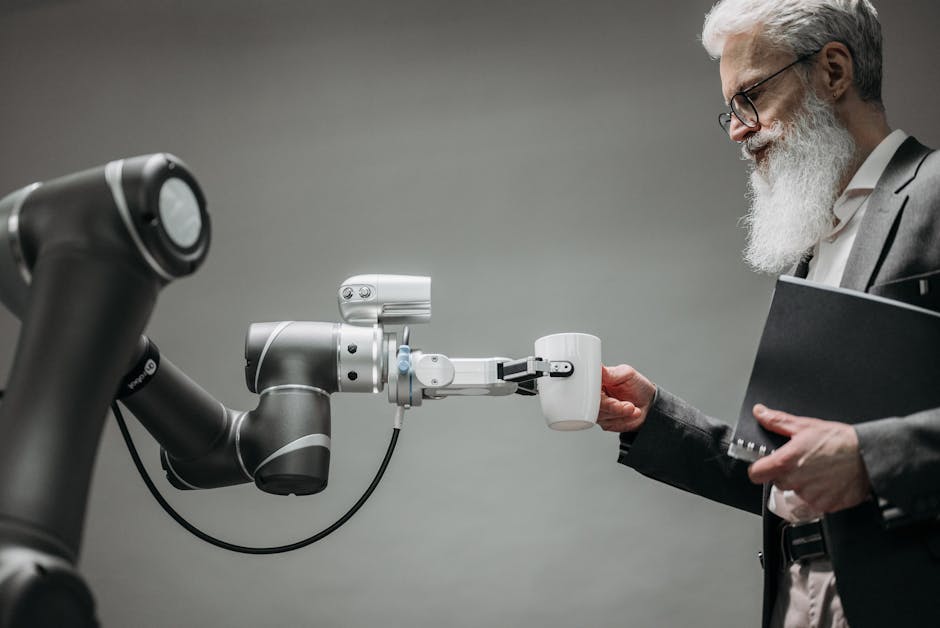
Photo by Pavel Danilyuk on Pexels.
The cybersecurity imperative: AI as both threat and shield
South Africa faces a severe cybersecurity challenge, ranking third globally in the incidence of cyberattacks. The rise of AI is accelerating the sophistication and scale of these threats, making robust cyber resilience non-negotiable for AI automation. This means that any AI system we build must not only be resilient to operational disruptions but also inherently secure.
AI can be a powerful tool for resilience. It significantly enhances business resilience by improving risk detection, decision-making, and operational adaptability. This enables a shift from reactive to proactive strategies for managing disruptions in areas like supply chain optimisation and predictive maintenance. So, while AI introduces new attack vectors, it also offers powerful tools to defend against them, provided it's implemented with security-by-design principles. Our work with clients like Hepstar and Glydepay has consistently shown that a proactive, security-first approach pays dividends.
What we'd tell you to do about it
- Prioritise resilience over raw efficiency: When evaluating AI automation projects, ask not just "how fast?" but "how robust will this be when the power goes out or the network drops?"
- Design for POPIA from the start: Treat POPIA as a framework for building better, more trustworthy systems, not just a compliance checkbox. This will naturally lead to more resilient data handling.
- Invest in MLOps: Don't just deploy models; plan for their ongoing monitoring, governance, and maintenance in production. This is non-negotiable for sustained value, especially in a dynamic operational environment.
- Embrace AI for resilience: Look for opportunities where AI can proactively manage risks, predict disruptions, and adapt operations, turning potential crises into manageable challenges.
- Demand working pipelines, not just presentations: Your "AI strategy" is only as good as the systems that run at 3am. Insist on proof-of-concepts that demonstrate resilience in real-world conditions.
We’ve delivered 50+ projects across 5+ industries, always with a focus on practical outcomes. Most of your team's day disappears into copy-paste between systems. We build the automations that do that part — so they do the work only people can. Our AI automation services are built with these South African realities at their core.
Frequently asked questions
Why is resilience more important than efficiency for AI automation in South Africa?
In South Africa, unpredictable factors like load shedding and connectivity issues can cripple efficiency-focused systems. Resilient AI automation ensures your critical processes continue to function, even if degraded, preventing costly downtime and maintaining business continuity. Without resilience, efficiency is fleeting.
How does load shedding specifically impact AI infrastructure?
Load shedding directly affects the feasibility and operational costs of large-scale AI deployments by requiring significant investment in alternative power sources. It demands systems that can gracefully shut down, restart, and pick up where they left off without data loss or corruption, fundamentally altering design considerations.
What role does POPIA play in building resilient AI systems?
POPIA isn't a hurdle; it's a design constraint that forces better systems. Compliance-by-design ensures data integrity, auditable processes, and robust security. This foundational strength makes the entire AI system more resilient to both operational disruptions and potential data breaches, which are heightened by AI's rise.
What is MLOps and why is it crucial for resilient AI in SA?
MLOps (Machine Learning Operations) provides the framework to reliably deploy, scale, monitor, and govern AI models in production. In South Africa's challenging environment, MLOps practices like continuous monitoring for model and data drift, and ensuring governance, are vital for maintaining the reliability and performance of AI systems despite operational volatility.
Can AI actually enhance business resilience?
Yes, AI significantly enhances business resilience. It improves risk detection, decision-making, and operational adaptability. By shifting from reactive to proactive strategies—for example, in supply chain optimisation or predictive maintenance—AI helps businesses anticipate and manage disruptions more effectively, making them more robust against unforeseen challenges.
How can Automation Architects help build resilient AI systems?
We design and implement AI automation with South African realities in mind. Our approach prioritises systems that are fault-tolerant, POPIA-compliant, and built to degrade gracefully. We focus on delivering working pipelines that ensure your critical operations continue, even when the lights go out, offering a Free AI Assessment to get started.
Ready to build AI that works, no matter what?
Your business needs AI automation that doesn't just promise efficiency but delivers unwavering resilience. Talk to us about building systems designed for South Africa.
Book your Free AI Assessment today.
New to ai automation? Start with our ai automation guide.