The Myth of the Talking AI Agent: Why Invisible Automation is Real Success in 2026
The air is thick with talk of AI agents. You've seen the demos: AI bots chatting away, solving problems, perhaps even booking flights. It's compelling, but it's also a distraction. Most of what's being sold as the future of AI agents for business looks a lot like a more articulate chatbot. The real impact in 2026, the kind that moves the needle on your bottom line, isn't about an AI you talk to. It's about the invisible AI agent that just gets the work done.
We've seen over 50 projects deliver real value. That value rarely comes from an AI that announces itself with a friendly greeting. It comes from the pipeline that runs at 3am so nobody has to, the process that just works.
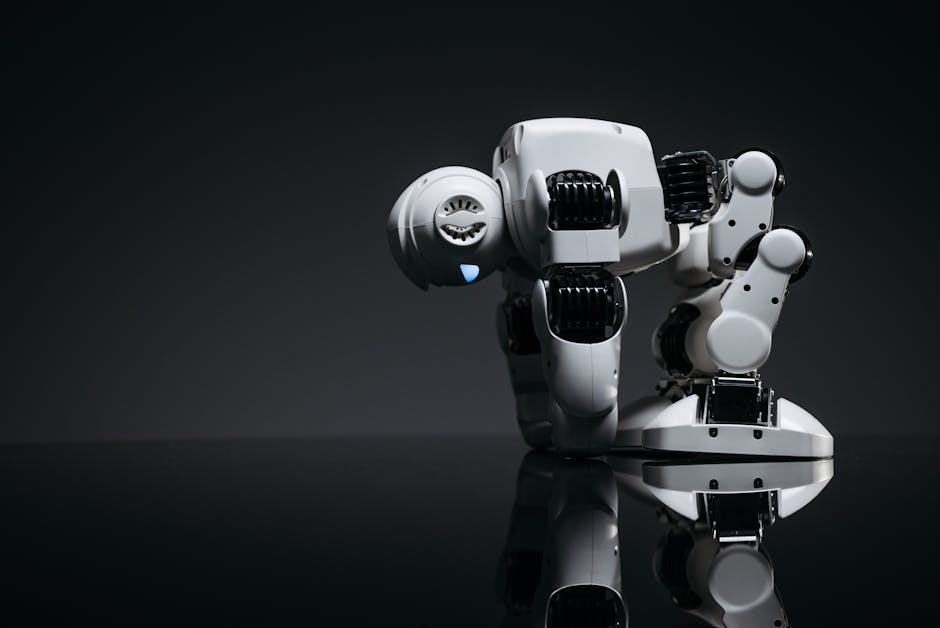
Photo by Pavel Danilyuk on Pexels.
Myth: "AI agents need to be conversational to be useful."
Reality: While conversational AI has its place – 72% of businesses use chatbots for customer interactions – the most impactful AI agents in 2026 are operational software. They plan, reason, and execute multi-step tasks across systems with limited human oversight. Think of them as highly capable digital employees, not just sophisticated chat interfaces. Their job isn't to talk to you; it's to complete a task, often without you even knowing they're there.
Myth: "More data is always better for training AI agents."
Reality: The real data moat isn't big data; it's clean, accessible data. Messy data at scale is a liability. For AI agents to function reliably, they need structured, usable data. We build the data pipeline first. Skip it, and even the best AI agent just hallucinates confidently on bad data. For South African businesses, this also means being deliberate about data residency and POPIA compliance.
Myth: "AI agents will replace entire teams."
Reality: AI doesn't replace teams; it deletes the boring 80% so people do the valuable 20%. AI automation is projected to deliver 20-40% productivity improvements and substantial cost savings by handling repetitive, high-volume tasks. This frees your human employees for strategic work, problem-solving, and the creative tasks only people can do. It's about augmentation, not wholesale replacement.
Myth: "A successful AI agent project starts with a big strategy document."
Reality: Most AI strategies are a PDF. This one runs at 3am so nobody has to. A proof-of-concept isn't a slide deck; it's a working pipeline, even a simple one. Hype is built on presentations; value is built on working code. We prioritise delivering small, functional demos that cut through the noise and prove value early. This approach reduces risk and builds confidence.
The best AI agent won't feel like an agent at all — it'll feel like a process that just works.
This is our core philosophy. Real success is invisible integration: the task is simply done, not a bot you keep poking. By 2026, the focus has shifted from simple chatbots to "Workflow-Integrated AI" that operates as an intrinsic part of business processes. This means AI planning tasks, utilising software tools, and executing multi-step operations autonomously. The real success of AI is increasingly defined by its invisibility, seamlessly embedded into workflows and systems, rather than existing as a standalone tool or initiative. This is particularly true for complex backend operations where visibility isn't just unnecessary, it's often a distraction. Our approach ensures that POPIA compliance is a design constraint, not an obstacle, producing more robust, auditable, and trustworthy processes. We've delivered 50+ projects for the likes of Hepstar, Travelstart and Flight Centre, proving this approach works.

Photo by Pavel Danilyuk on Pexels.
What this actually means for your business
- Focus on workflows, not just conversations: Identify repetitive, multi-step processes that consume human time, regardless of whether they involve customer interaction.
- Prioritise clean data: Invest in data engineering to ensure your AI agents have reliable, structured data to work with. Bad data means bad automation.
- Start small, prove value: Don't wait for a perfect, enterprise-wide strategy. Pick a high-impact workflow, build a working proof-of-concept, and demonstrate tangible results.
- Embrace POPIA by design: Integrate compliance requirements from the outset. This builds trust and ensures your automations are robust and auditable, especially in South Africa.
Frequently asked questions
What is an "invisible" AI agent?
An invisible AI agent is an automation that operates silently in the background, executing tasks and workflows without requiring direct user interaction or announcing its presence. It integrates seamlessly into existing business processes, making the task simply happen rather than being a tool you actively 'talk' to.
Why is invisible automation more valuable than visible AI agents (like chatbots)?
While chatbots have their place in customer service, invisible automation focuses on backend processes, data handling, and multi-step task execution. It delivers real productivity gains by removing repetitive work, freeing human teams for strategic tasks, and often handling processes that don't need a conversational interface at all.
How does this approach align with POPIA compliance in South Africa?
Focusing on invisible, workflow-integrated AI means compliance can be built in from the ground up. By designing systems that handle data precisely and only when needed, with clear audit trails, POPIA becomes a design constraint that leads to more robust and trustworthy automations, rather than an afterthought.
Does this mean we shouldn't use conversational AI at all?
Not at all. Conversational AI has proven value, especially in customer-facing roles. However, it's often mistaken for the full scope of AI agents. For internal operations and complex data workflows, the most impactful AI agents are those that don't need to 'talk' to get the job done.
What kind of tasks can invisible AI agents automate?
Invisible AI agents can automate a wide range of tasks, from invoice processing and data extraction to internal approvals, report generation, and data synchronisation across disparate systems. Essentially, any rule-based, repetitive, or multi-step digital task can be a candidate for invisible automation.
How can we start implementing invisible AI automation in our business?
The first step is to identify the repetitive, high-volume tasks that consume significant human effort. From there, a focused Free AI Assessment can pinpoint specific workflows ripe for automation, starting with small, working proofs-of-concept that deliver tangible results.
Ready to build the automations that just work?
Most of your team's day disappears into copy-paste between systems. We build the automations that do that part – so they do the work only people can. If you're ready to move beyond the hype and implement AI agents that deliver real, invisible value, let's talk.
Find out how a workflow-first approach to AI can transform your operations. Book a Free AI Assessment today.
New to ai agents? Start with our ai agents guide.